
Beginner objective
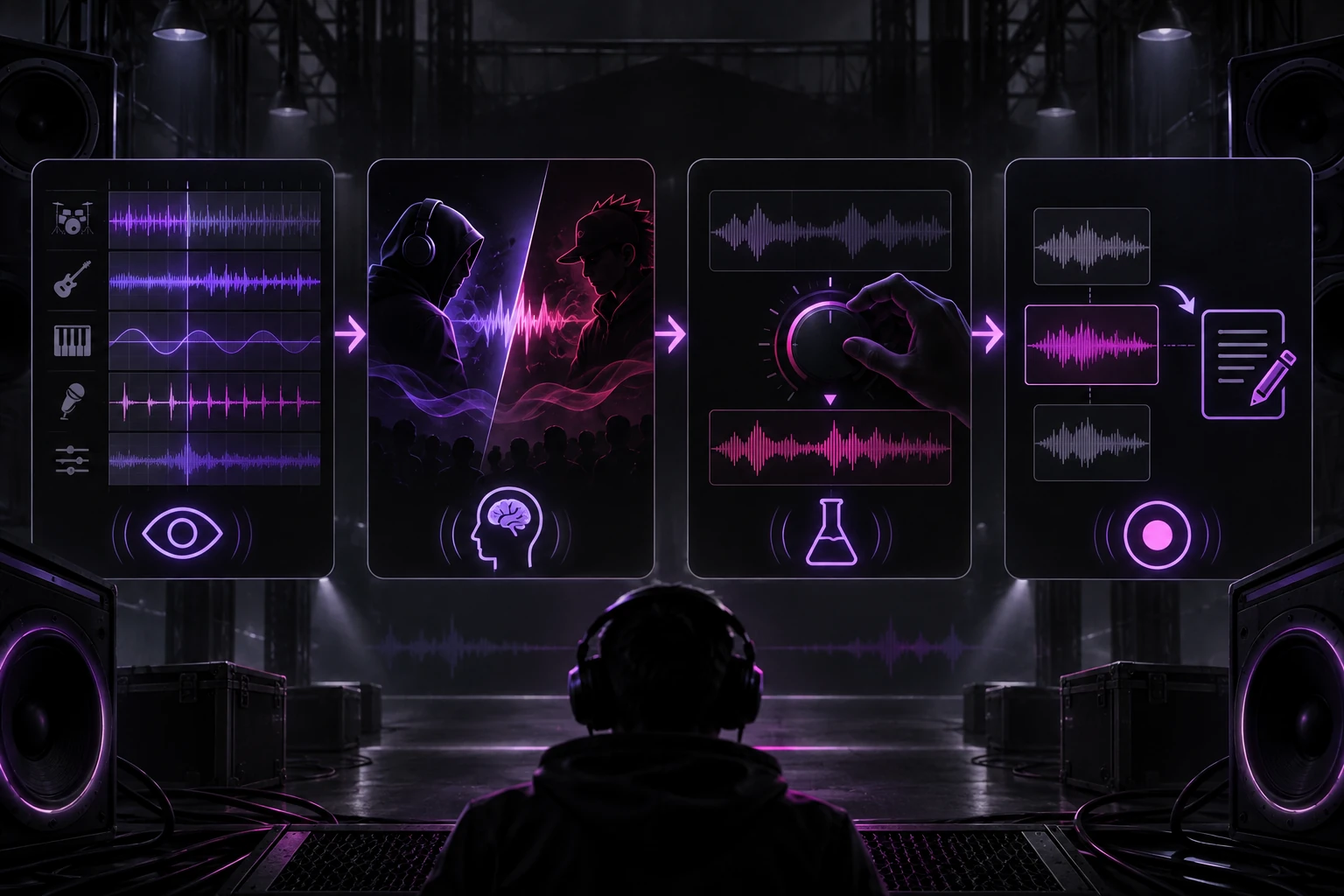
Your first objective is to understand the sound arrangement system before treating battle outcomes as meaningful. The game itself tells players to make the arrangement solid and clear. In practical terms, learn what the current interface lets you change, what feedback it exposes, and which parts of the result can actually be repeated.
What to learn first
Learn how the interface presents your arrangement, how battle invitations work, and what changes after a win or loss. Avoid relying on unverified community formulas while the game remains in a testing phase. A sensible first comparison changes one visible choice at a time so you can distinguish an observed effect from a guess about hidden scoring.
Protect your progress
Because future updates may cause data loss, keep your expectations flexible and record any setup you may want to recreate later. Save the version context, visible arrangement choices and the result you observed; do not assume a current configuration or progression state is permanent.
Beginner mistakes to avoid
Do not optimize around an invented percentage, treat one battle as proof of a formula, or assume that a page written for another version still applies. First establish what the game currently shows, then record a repeatable observation before changing the next variable.
The beginner core loop
A useful first loop is: inspect the current interface, create or adjust an arrangement, observe the feedback, and only then approach a battle. After the battle, record what happened and compare it with the previous setup. The purpose of this loop is to learn the relationship between arrangement and outcome, not to discover a guaranteed formula from one result.
What remains unverified
The public information does not confirm exact component values, hidden scoring weights, damage, rarity, rewards, or a permanent best build. A beginner can safely learn the named systems and the stated defeat consequence, but should label more detailed conclusions as observed or unverified until they can be reproduced in the current version.
Preparing for a first battle
Before accepting a challenge, make sure you can describe the current arrangement and the feedback it produces. A beginner does not need to know a secret formula to prepare well. The useful preparation is to preserve a baseline, avoid several last-minute changes, and understand what the game actually reports after the interaction.
Testing has a purpose
Testing is not a promise that every hidden value can be discovered. It is a way to reduce confusion between a changed setup and a changed result. Keep the arrangement stable, alter one visible choice, and compare under similar conditions. If the outcome cannot be reproduced, keep it as an observation rather than turning it into beginner advice.
A beginner’s decision tree
If you do not know what the system is, read Sound System. If you know the system but cannot organize a setup, read Sound Arrangement. If the setup behaves differently after an adjustment, read Testing or Troubleshooting. If another player challenges the sound, read Sound Battle. If old notes no longer match, check Data Testing and Updates before rebuilding everything.
Build first, then refine
A first setup gives you a baseline, but completing it is only the beginning of useful learning. Before making broad changes, identify what the current interface shows and write down the visible choices you can reproduce. A setup that cannot be described later is difficult to compare with anything that follows. Refinement means making deliberate changes in relation to that baseline. Keep the stated goal of a solid and clear arrangement in view, but do not translate those qualitative words into invented values. Change one visible choice when practical, observe the available feedback, and keep uncertain conclusions separate from confirmed behavior.
Why arrangement matters
The Sound Arrangement is the part of the core loop the player prepares before a Sound Battle. That makes it more than a setup screen to pass through quickly. It is the configuration that gives later testing and battle observations their context, so beginners benefit from understanding what they changed before trying to explain an outcome. No currently verified source provides a permanent best arrangement or a complete scoring recipe. Beginners should use the Sound Arrangement pages to learn a repeatable refinement process, not to copy unsupported formulas. A controlled, understandable setup produces better questions even when the underlying mechanics are not yet documented.
Test before judging the setup
A single impression can be useful, but it is not enough to establish a rule. Test a stable arrangement, record the feedback or result that is actually visible, and repeat the comparison where possible. If the same setup produces an unclear or inconsistent observation, keep the conclusion provisional rather than forcing it into a simple explanation. Testing protects beginners from blaming the wrong change. It also prevents several simultaneous adjustments from hiding the relationship they are trying to understand. The aim is practical clarity: know what was changed, what was observed, and what still needs verification.
Learn from the result
After a Sound Battle, compare the outcome with the arrangement you preserved before the interaction. Record only what the game actually showed and separate that observation from any theory about why it happened. The confirmed defeat consequence can guide expectations, but the complete process behind an outcome is not currently documented. Use the result to choose the next question. If the setup itself is unclear, return to Sound System or Sound Arrangement. If a controlled change behaved unexpectedly, use Testing and Troubleshooting. If behavior differs from older notes, consult Data Testing and Updates before assuming the arrangement alone caused the difference.
Where to go next
Read How to Play for the broad gameplay loop, then use Sound System to understand the central concept and Sound Arrangement to organize refinement. Move to Sound System Testing or Arrangement Troubleshooting when a comparison exposes a specific problem. Read Sound Battle and Battle Preparation once you can preserve and describe a baseline. Keep the information boundary visible throughout that path. Exact component values, hidden weights, damage, rarity, rewards, and a universal best build are not currently verified. Data Testing explains why observations may need to be checked again as the game changes, and Updates helps place older notes in their current context.