
What a sound arrangement does

The developer explicitly tells players to make their own sound arrangement until it is solid and clear, because it will be tested when another player invites them to battle. The arrangement is the player-controlled preparation layer between the Sound System and the battle interaction, not a published recipe with guaranteed values.
Primary goal
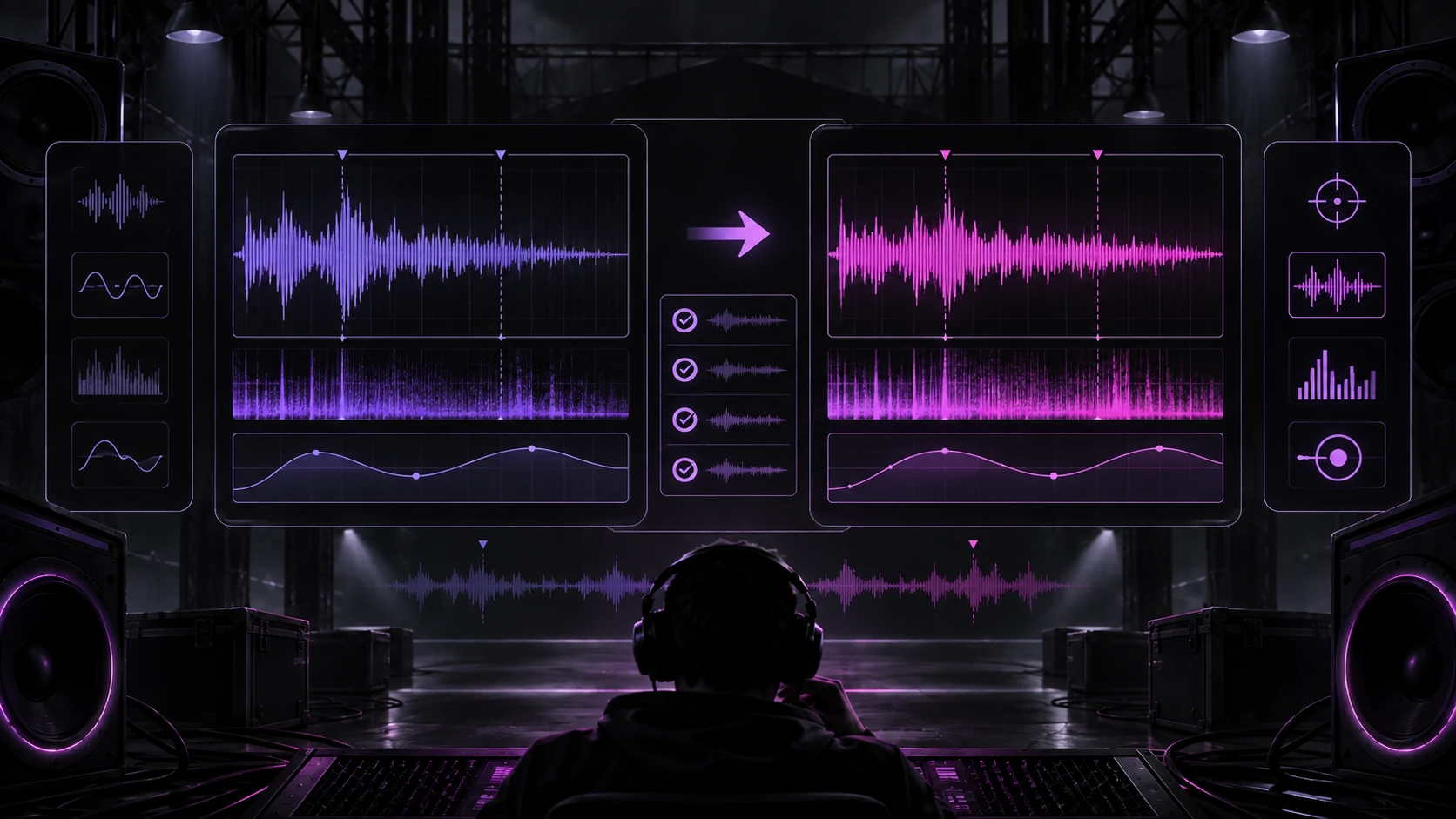
A good arrangement should avoid being covered up or cancelled and should perform as well as possible during battle. Since the public description gives qualitative language rather than a formula, refine toward stable visible feedback and repeatable behavior instead of chasing a supposed universal component mix.
What we do not claim
There is currently no verified official public formula for “best arrangement,” exact frequency ratios or component scoring weights. Exact component properties, damage values, rarity tiers and percentage thresholds remain unverified unless a current version exposes them and they can be reproduced.
A repeatable refinement loop
Record the current arrangement, observe the feedback, change one visible variable, and compare the next result under similar conditions. Keep the version and battle context with the note. This helps separate an observed change from a theory about hidden scoring.
Connection to Sound Battle
Sound Battle is where the arrangement is challenged by another sound. Preparation matters because the official description connects being covered up with defeat and reduced power, but it does not disclose which internal values determine that outcome.
What players are trying to build
Players are trying to build a sound arrangement that remains solid and clear when it is tested. That goal is deliberately qualitative in the available public description. A useful arrangement is therefore one that the player understands, can reproduce, and can adjust after observing feedback, not merely one copied from an unexplained list.
What to observe during refinement
Watch for the exact interface feedback, whether the same setup behaves consistently, and what changes after a battle. Record the arrangement before and after each meaningful adjustment. If a result changes while several conditions changed, keep it as an observation without claiming to know the cause.
Troubleshooting logic
When a setup seems weak or inconsistent, return to the last stable version, check whether the game changed, and test one visible variable. Do not jump directly to a hidden component formula. The public evidence supports a controlled workflow, while exact weights and thresholds remain unverified.
A refinement workflow
Begin by writing down the arrangement as it currently exists. Observe the same setup long enough to know what feedback is stable, then choose one visible change with a clear reason. Compare the result under similar conditions and keep both versions in the record. If the result improves, describe the observation narrowly; do not claim that the change is universally optimal.
Signals worth recording
Useful signals include the exact interface wording, whether a change persists, whether the same setup produces the same visible response, and what happens when the arrangement reaches battle. A lack of feedback is also information, because it tells the player not to assign a hidden percentage or component effect without evidence.
Arrangement versus equipment theory
The arrangement page describes player organization and testing, not an equipment database. Audio vocabulary may make a theory sound precise, but terms such as power, clarity, or balance should not be converted into numeric game attributes unless the current experience explicitly exposes them.
When a refinement is complete
A refinement is complete enough for the next battle when the player can reproduce the setup, explain the latest change, and identify what feedback will be checked. Completion is a testing decision, not proof that the arrangement is the strongest possible or that future versions will preserve its behavior.
From setup to refinement
A basic setup becomes a Sound Arrangement workflow when the player begins preserving, comparing, and deliberately revising it. First capture a baseline that can be reproduced. Then decide what part of the visible result needs attention and make a change with a clear reason. Organization matters because an unexplained collection of changes cannot support a useful comparison. Refinement is not a race toward complexity. A simpler arrangement that exposes cause and effect can teach more than a larger one whose behavior cannot be traced. Keep the game’s qualitative goal of solid and clear in view without converting those words into unsupported thresholds.
Identify one problem at a time
Describe the problem using what can actually be observed: a visible response changed, a setup no longer behaves consistently, or a battle outcome differs from the baseline. Avoid starting with an assumed hidden cause. Check whether the arrangement was preserved correctly and whether the current version or test conditions changed. Choose one visible adjustment that can test the question, then compare it with the baseline under similar conditions. If several changes are unavoidable, record them as a group and avoid crediting one part. A narrow inconclusive result is more useful than a confident explanation without evidence.
Prepare the arrangement for battle
Battle preparation begins when the arrangement is stable enough to reproduce and the player knows what feedback to watch. Save the current baseline, record the latest controlled change, and avoid last-minute revisions that would make the outcome difficult to interpret. The aim is to enter Sound Battle with a known configuration rather than an untracked experiment. After battle, preserve the visible outcome separately from the theory behind it. The confirmed description connects being covered up with defeat and reduced power, but exact internal comparisons remain unverified. Use the result to define the next test instead of treating it as proof of a complete formula.
Avoid overcorrecting
When an arrangement produces an unwanted or unclear result, return to the last understandable version before changing several areas. Overcorrecting removes the baseline and can create new uncertainty faster than testing resolves it. Make the smallest visible change that addresses the identified problem, observe it more than once when practical, and keep notes concise. Preserve both versions until the comparison is understood so a useful baseline is not lost during another experiment. If the behavior cannot be reproduced, leave the conclusion awaiting verification. Read Sound System for the underlying concept, the checklist for preparation, Testing and Troubleshooting for controlled comparisons, and Sound Battle for outcome context. Component attributes, hidden scoring weights, exact ratios, and a permanent best arrangement are not currently verified. Current observations should also retain their version context because later Data Testing changes may require the same comparison to be repeated.