
What a sound battle is
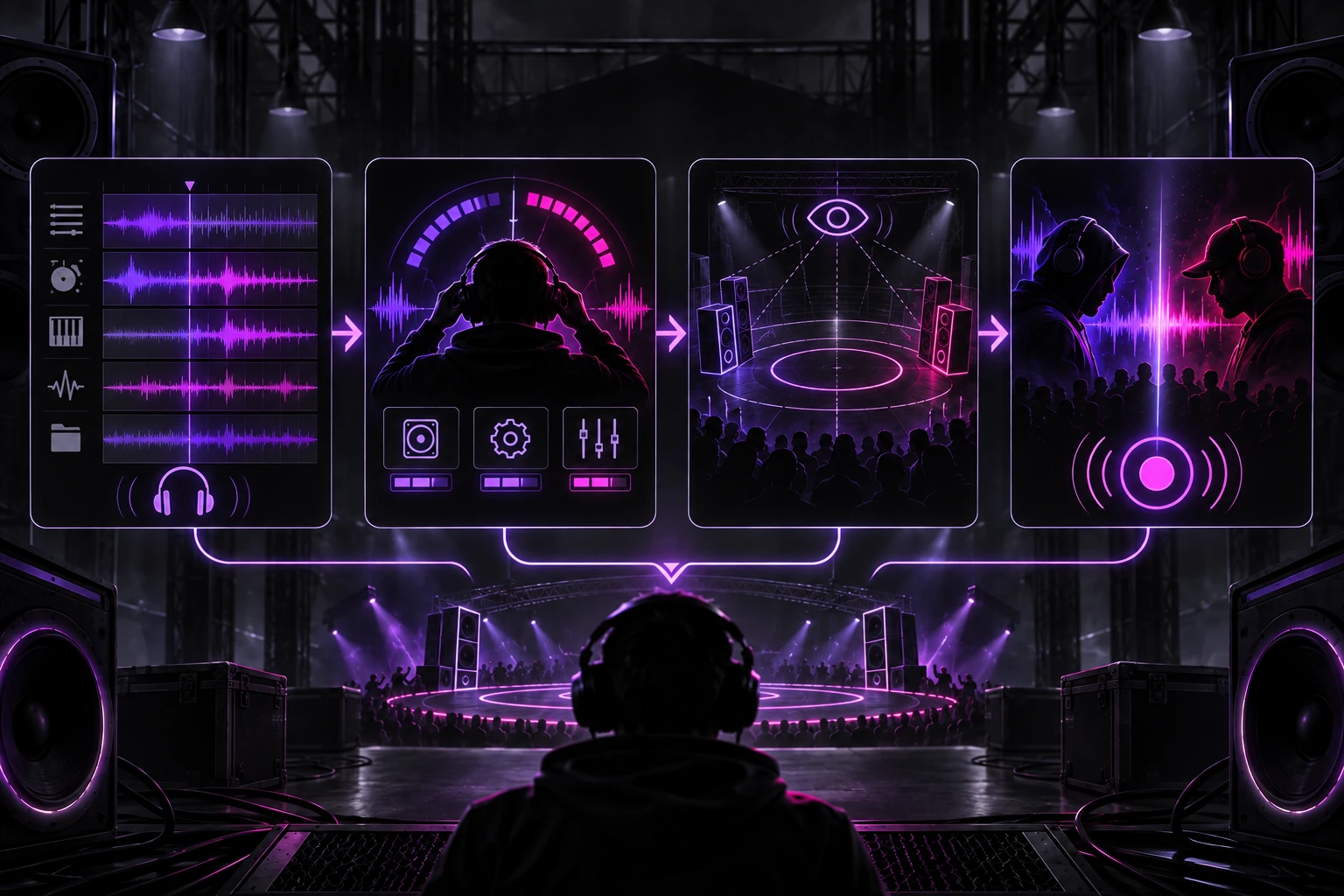
The official description says another player can invite you to battle sound. Your sound arrangement is the preparation that matters going into that interaction. A battle should be understood as a comparison of player-created sounds, while the detailed scoring algorithm remains unavailable.
What defeat means

If your sound is covered up, the developer describes it as defeated and becoming less powerful. That is the safe statement about the outcome. The public description does not establish a complete reset, a specific numeric penalty, or a guaranteed recovery path.
What remains unknown
The official page does not publish a full scoring algorithm, reward table or verified ranking formula. It also does not verify exact component weights, hidden thresholds, matchmaking rules or a guaranteed winning arrangement. Treat those claims as unverified until current evidence supports them.
How to prepare
Before entering a battle, stabilize the arrangement, note what the game visibly reports, and avoid changing several major choices at once. After the outcome, record whether the sound was covered up and what power change was actually shown. This is more reliable than copying a build whose version and conditions are unknown.
Reading a battle result
A single win or loss is an observation, not proof of a formula. Compare repeated situations only when the arrangement, version and conditions are sufficiently similar. If the game exposes new feedback, document the exact wording before interpreting it.
What happens during battle
The confirmed description is compact: another player may invite you to battle sound, and a sound that is covered up is described as defeated and less powerful. The public material does not provide a turn-by-turn sequence, visible score breakdown, reward table, or matchmaking explanation, so those details should not be invented.
What players can observe
Players can observe the invitation, the arrangement they brought into the interaction, the visible feedback, and the stated consequence after defeat. These observations can support a dated guide note. They cannot by themselves prove an exact hidden score, a universal best build, or a permanent penalty.
Post-battle adjustment
After a result, preserve the previous setup as a baseline, write down what the game showed, and change one meaningful factor before the next comparison. This makes the next battle useful as a test. If data or rules change after an update, mark earlier conclusions as historical observations rather than current guarantees.
The battle boundary
Sound Battle begins where private preparation becomes an interaction with another player’s sound. The arrangement enters the interaction as the preparation that is tested, but the public description does not disclose a complete sequence of turns, scores, rewards, or ranking rules. This page therefore explains the relationship and the safe outcome language rather than inventing missing mechanics.
How to report an outcome
A useful outcome report names the arrangement state, the version or date, the visible battle feedback, and the stated consequence. It should distinguish what happened from why the writer thinks it happened. For example, a covered-up sound becoming less powerful is a supported description; assigning that result to an exact hidden component weight is not.
Preparation and uncertainty
Preparation reduces avoidable uncertainty but cannot remove uncertainty that the game does not expose. A player can stabilize the setup, avoid several last-minute changes, and preserve notes. A player cannot guarantee a win, predict an opponent’s undocumented configuration, or infer a full scoring formula from one battle.
After the result
After the result, first preserve the previous configuration, then decide whether the next question is about recovery, arrangement refinement, or version change. Use After a Loss for the confirmed consequence, Arrangement Troubleshooting for setup issues, and Updates or Data Testing if the same behavior no longer reproduces.
Where battle fits in the gameplay loop
Sound Battle follows preparation rather than replacing it. The player first works within the Sound System, develops a Sound Arrangement, and tests that arrangement until its visible behavior is understood well enough to preserve. Battle then places the known arrangement into an interaction with another player’s sound. This order gives the outcome useful context for later refinement. If the arrangement was changed immediately before battle or cannot be reproduced afterward, the result answers very little about refinement. A stable baseline does not guarantee success, but it lets the player compare what happened with a known starting point and choose a more focused next test.
Prepare before entering battle
Before accepting an invitation, record the current arrangement and the feedback already observed during testing. Confirm that the setup can be reproduced, avoid combining several last-minute adjustments, and decide what visible result you will watch. Preparation is strongest when it reduces uncertainty around your own configuration without claiming knowledge of an opponent’s undocumented setup. The aim is not to calculate a hidden winning score. It is to enter with a clear baseline that remains useful after the interaction. If the current arrangement has not been tested or its behavior is inconsistent, return to Sound Arrangement and Testing before using a battle outcome to guide major changes.
Treat the outcome as feedback
During battle, observe only what the current game exposes: the invitation, the arrangement brought into the interaction, visible or stated feedback, and the consequence shown afterward. Preserve the exact wording when possible. Do not add assumed stages, scores, or causes that the interface and available description do not document. A result is a piece of feedback about one interaction, not a complete diagnosis. Defeat can safely indicate that the sound was covered up and became less powerful because that relationship is stated publicly. It does not establish the amount of power lost, the calculation behind defeat, or a guaranteed method of recovery.
Refine after a weak result
Begin with the last stable arrangement and separate the visible outcome from your explanation of it. Ask whether the setup changed, whether the conditions were comparable, and whether the same result can be observed again. Select one meaningful adjustment that tests a specific weakness, then preserve both versions for comparison. Common mistakes include rebuilding everything after one loss, treating a win as proof of a universal arrangement, copying an undocumented recipe, or ignoring version changes. Exact scoring, component weights, ranking, matchmaking, rewards, numeric penalties, and recovery rules remain unverified. Continue with Sound Arrangement for refinement, Testing or Troubleshooting for controlled comparisons, After a Loss for defeat context, and Data Testing when older results stop reproducing.