
What the Sound System is for
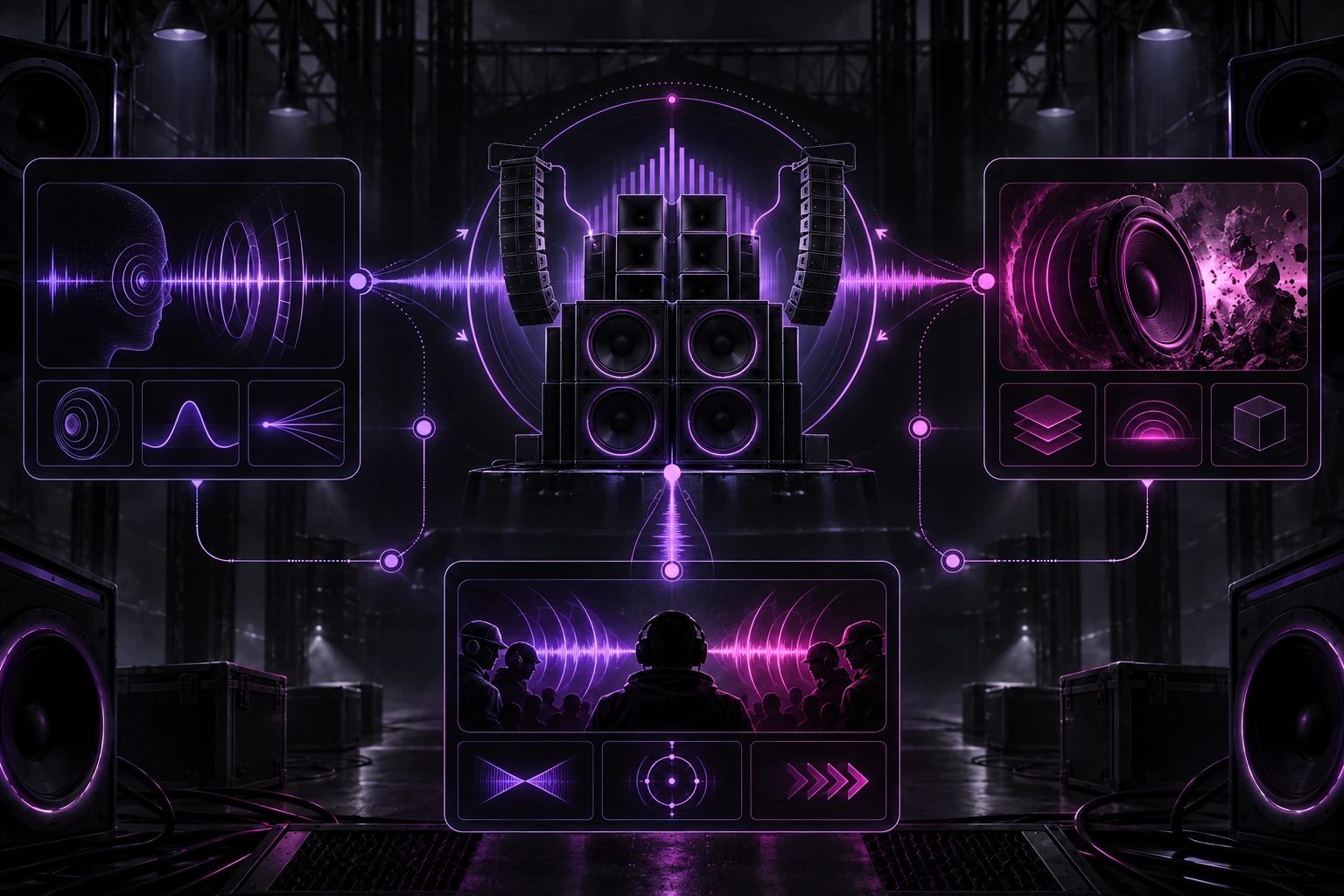
The official description identifies the Sound System as the game’s central feature. Players create their own sound arrangement and work to make it solid and clear. Its purpose is therefore to give the player a sound configuration to refine and bring into the battle interaction, not to provide a publicly documented equipment-stat formula.
What “good” currently means
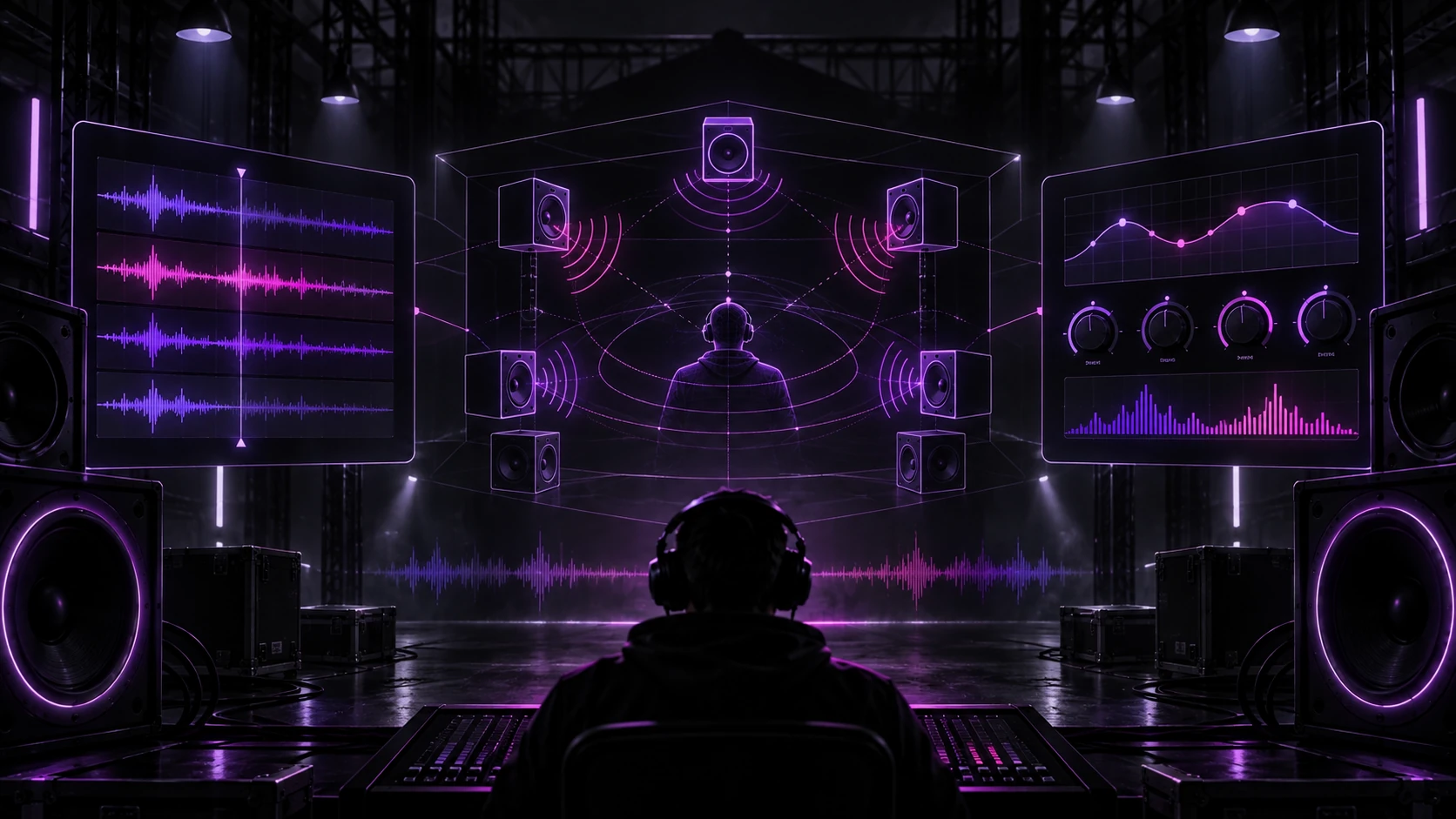
The strongest verified language is qualitative: solid, clear and able to perform optimally during battle. No official public percentage or stat threshold is provided. Players should observe the interface response, stability across repeated tests and the stated battle consequence rather than inventing wattage, rarity or damage values.
Where to go next
Use the Sound Arrangement pages for preparation and troubleshooting, then the Sound Battle section for what happens when another player challenges you. The testing page is useful when a result changes unexpectedly, while the build page focuses on a repeatable setup process rather than a fixed recipe.
What can be verified
The current verified layer is the named Sound System, the player-created arrangement, the qualitative goal of solidity and clarity, and the relationship between that arrangement and sound battles. These statements describe the observable purpose without asserting hidden component properties.
What should remain unverified
Do not treat equipment stats, wattage, damage, rarity, drop rates or a formula for optimal performance as confirmed. If a future version exposes those fields clearly, record the exact label and version before adding them to the database or a guide.
How players should test
Use a stable arrangement as a baseline, observe it more than once when practical, then change one visible choice. Keep the test conditions, version, feedback and outcome together. If the result changes after several variables changed, mark the test inconclusive instead of assigning a hidden score to the system.
Common misconceptions
The name Sound System does not prove that public equipment statistics exist. The words solid and clear do not establish a numeric threshold. A battle result does not reveal the whole formula. These distinctions prevent familiar audio terms from being mistaken for undocumented game data.
A practical mental model
Think of the Sound System as the workspace, the arrangement as the configuration you control, the test as the way you learn visible behavior, and the battle as a real interaction that can expose consequences. This model is useful without requiring invented wattage, damage, rarity, or component tables.
The system’s responsibility
The Sound System gives the player a place to create and refine a sound arrangement. Its documented responsibility is functional rather than numerical: it connects player configuration with the possibility of a battle test. The public description does not turn the system into a catalog of known equipment attributes, so the guide focuses on purpose, interface feedback, and reproducible observation.
What to look for in the interface
Players should identify which controls affect the arrangement, which labels describe the current state, and which changes remain visible after saving or returning to the system. Record exact wording instead of translating a familiar audio term into a made-up game stat. This observation helps answer how the current version works without claiming that every internal value is exposed.
System-level mistakes
A common mistake is to treat the system name as proof of speakers, amplifiers, wattage, rarity, or damage fields. Another is to treat a battle outcome as a complete explanation of the system. The safer approach is to separate what the interface names, what a player observes, and what remains hidden.
When to leave the system page
Leave this page for Sound Arrangement when the question becomes how to change or test a setup. Leave it for Sound Battle when the question concerns invitations, being covered up, defeat, or post-battle effects. Use the system page as the conceptual anchor, not as a replacement for those more specific workflows.
Its role in the gameplay loop
The Sound System connects creation, evaluation, and battle preparation. It is where the player’s arrangement has context before another sound challenges it. The available description confirms that players make their own Sound Arrangement and work toward a solid and clear result, so the system’s role can be understood without assuming a hidden equipment model. A useful sequence is to establish a reproducible arrangement, observe the feedback available in the system, refine through controlled tests, and then take the known setup toward Sound Battle. A battle outcome can send the player back into testing, but it does not by itself explain every part of the Sound System.
Sound System and Sound Arrangement
The Sound System is the broader feature and workspace; the Sound Arrangement is the player-controlled configuration within that context. Keeping the terms separate prevents a practical adjustment from being presented as a rule about the whole system. It also directs players to the right page when a question changes from meaning to method. Use this page to understand what the system is for and how it should be evaluated. Use Sound Arrangement when deciding how to organize, change, or preserve a setup. The relationship is confirmed at a qualitative level, while exact internal component effects and scoring relationships are not yet documented.
Finding weaknesses through observation
A weakness is safest to describe as a repeatable problem in visible behavior, feedback, or a battle outcome, not as an invented deficit in an unseen stat. Begin with a stable baseline, identify the specific behavior that seems inconsistent, and test one visible change. If the problem remains, record that result before moving to another possibility. This method narrows uncertainty without pretending to measure something the game does not expose. A system can be considered better understood when its arrangement is reproducible and its visible responses are consistent. That does not prove optimal performance or establish a numeric meaning for solid, clear, or powerful.
Repeated tests and current limits
Repeated testing matters because a single observation may reflect conditions that were not controlled or a version that later changes. Keep the arrangement, visible conditions, feedback, and outcome together. When the same pattern appears under comparable conditions, describe it as observed evidence while preserving the limits of what the test can prove. The public information still does not verify technical audio specifications, component attributes, hidden thresholds, exact battle weights, or a universal best system. Continue with the Build page for a repeatable setup process, Testing for controlled comparisons, Sound Arrangement for refinement, and Sound Battle for confirmed interaction and outcome language.