Before testing
Before testing, confirm that the setup can be reproduced and that its current visible state has been recorded. Identify every recent arrangement change and reduce the comparison to a manageable number of variables. If several major choices changed together, restore the last stable version or treat the next result as a broad observation rather than a cause-and-effect test. Check that each adjustment had a clear purpose. Complexity without a question makes later feedback harder to use. If the arrangement was repeatedly revised after an unclear result, pause and make sure it has not been overcorrected away from the last understandable baseline.
During refinement
Compare the most recent test with the baseline. Confirm what was actually observed, whether the conditions were similar, and whether the result repeated. Address an obvious weak area only when the comparison points to a specific question; do not invent a hidden metric to explain a vague impression. Before entering Sound Battle, state what you want to observe next. Preserve the arrangement, note any remaining uncertainty, and avoid last-minute changes. A battle can provide useful feedback about the prepared setup, but one outcome is not final proof of a formula or universal strategy.
Final readiness check
Confirm that the arrangement can be reproduced, recent results have been compared, obvious weak areas have been addressed, and no untested change remains hidden in the setup. State what you want to observe next and keep the baseline available. Readiness confirms preparation quality rather than strength; it does not establish a hidden score or guarantee an outcome.
Before battle
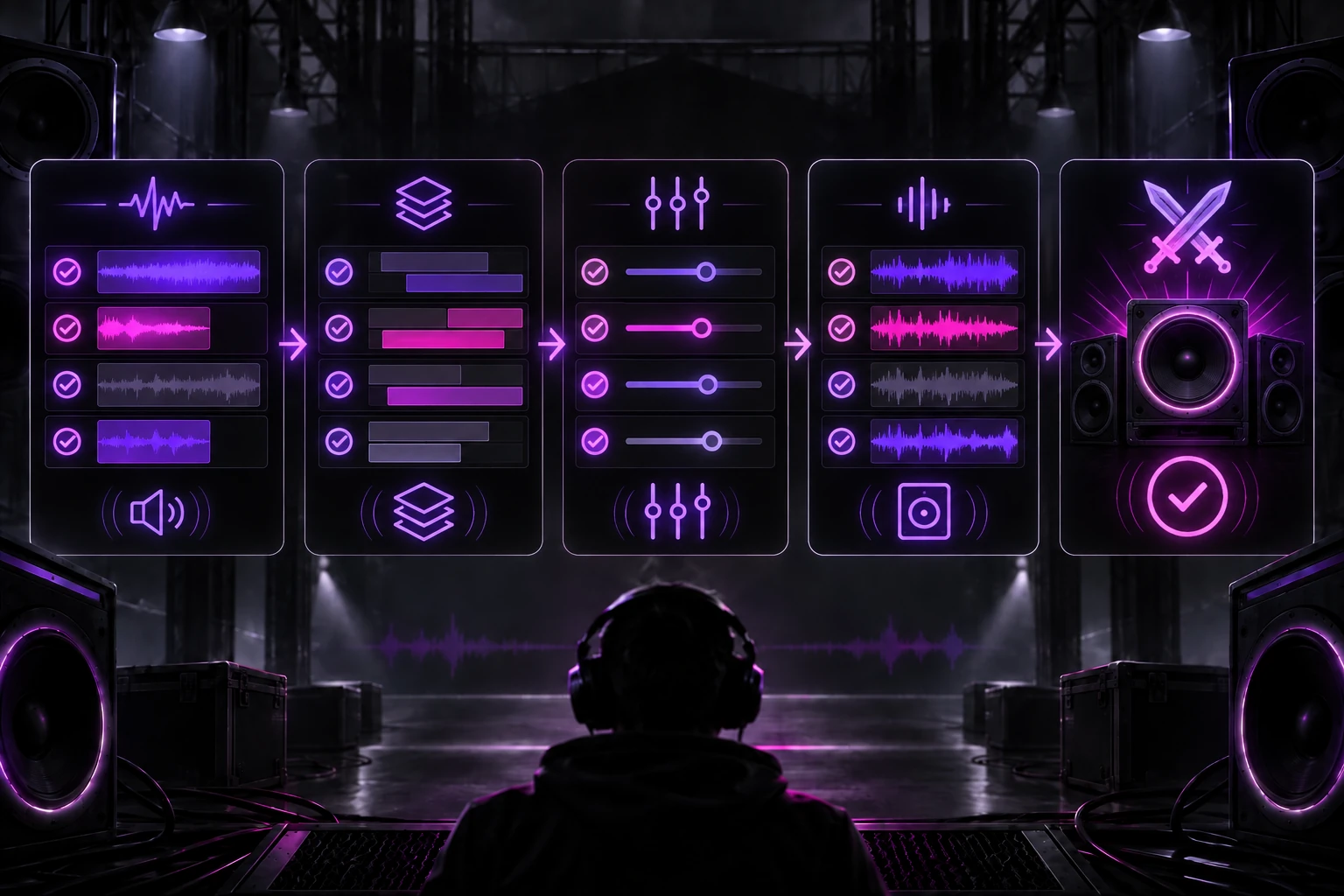
Check that the latest arrangement is saved and that the number of changed variables remains manageable. Confirm which feedback came from testing and which explanation is still only an assumption. Enter Sound Battle only when its outcome can be compared with a known setup, and plan to use that outcome as another observation rather than final proof.
If the checklist fails
Retest when one recent change still needs comparison. Simplify when several variables prevent a useful conclusion. Return to Arrangement Troubleshooting when a specific symptom repeats, and delay battle when the setup cannot be reproduced or the intended observation is unclear. Mark any item the current interface cannot confirm as unverified or awaiting verification instead of inventing a pass. A failed checklist is a routing result, not a score. Missing stability sends the arrangement back to setup; unexplained changes send it back to testing; a repeated weak area sends it to troubleshooting. Resume battle preparation only after the relevant item can be answered from a current observation. This keeps the checklist focused on readiness and prevents it from becoming another general arrangement guide. Recheck only the items affected by the correction, then run the final readiness check again. Preserve the last stable arrangement so that a failed correction can be reversed without losing the comparison point.